
Tourism as Aruba’s Modern Industry
One of the significant historical sites related to this industry is the Bushiribana Gold Mill, which played a crucial role in Aruba’s mining history.
For those of you who’ve been living under a rock either by choice or persuasion, Aruba’s primary source of income is tourism. The island’s white sandy beaches, succulent turquoise waters, exquisite weather, accentuated with soothing breezes and an impressive collection of roundabouts, has an annual influx of approx. 2 million visitors a year.
This makes tourism the primary industry and main source of income for the island. But I’m sure you might be wondering if this has always been the case… And the answer is… NO.
The Discovery of Gold
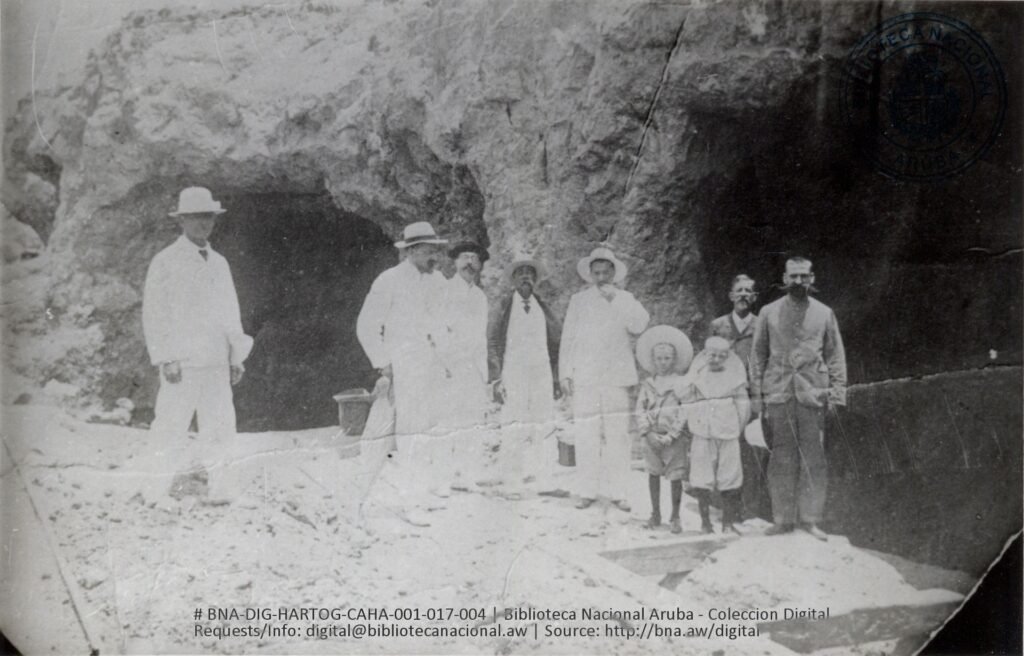
Aruba had a diverse array of industries throughout the years. Ranging from horse-trade, aloe, phosphate, oil, and today’s subject… gold. ‘Twas the year 1824 and a twelve-year-old by the name of Willem Rasmijn was herding his father’s sheep in the area known as Rooi Fluit. In the course of this wooly task he stumbled upon something shiny on the ground. Young Willem brought this shiny yellow metallic thingy to his father.
According to legend the senior Rasmijn had no clue as to what this object was, so he decided to journey to Playa, where he met up with a merchant who realized it was gold.
Note: Rooi is Papiamento for stream or creek. It’s usually dry most of the year, but during heavy rainfall there are instances where some sections develop rapids as it leads the rainwater to sea. Playa is an affectionate name for the capital Oranjestad. It is a reference to Playa de Caballos. Playa also means beach, in this case referencing the beach at Paardenbaai.
The Gold Rush of the 1800s
Regardless, the rumors of the discovery of gold prompted a rush that lasted till 1854 when the digging rights of Arubians were stripped to give concessions to foreign mining companies.
Starting with the Dutch Consessie de Young from Den Haag, followed by Isola company in 1867, to Ricket & Co of New York in 1868, which then lost the rights to the Aruba Island Gold Mining Company of London in 1872.
The Mines Across Aruba
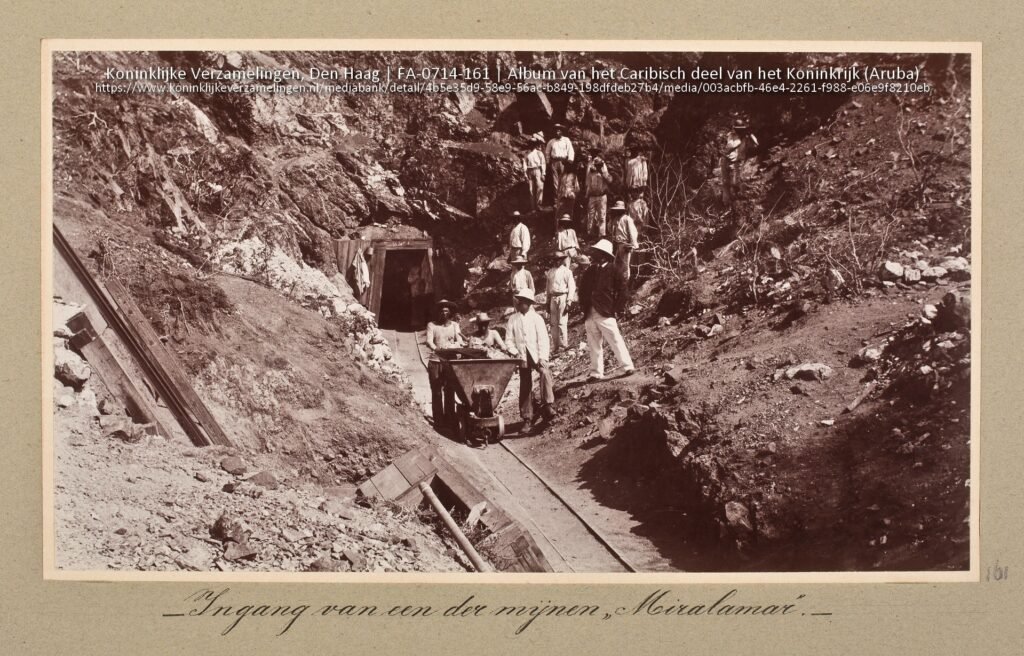
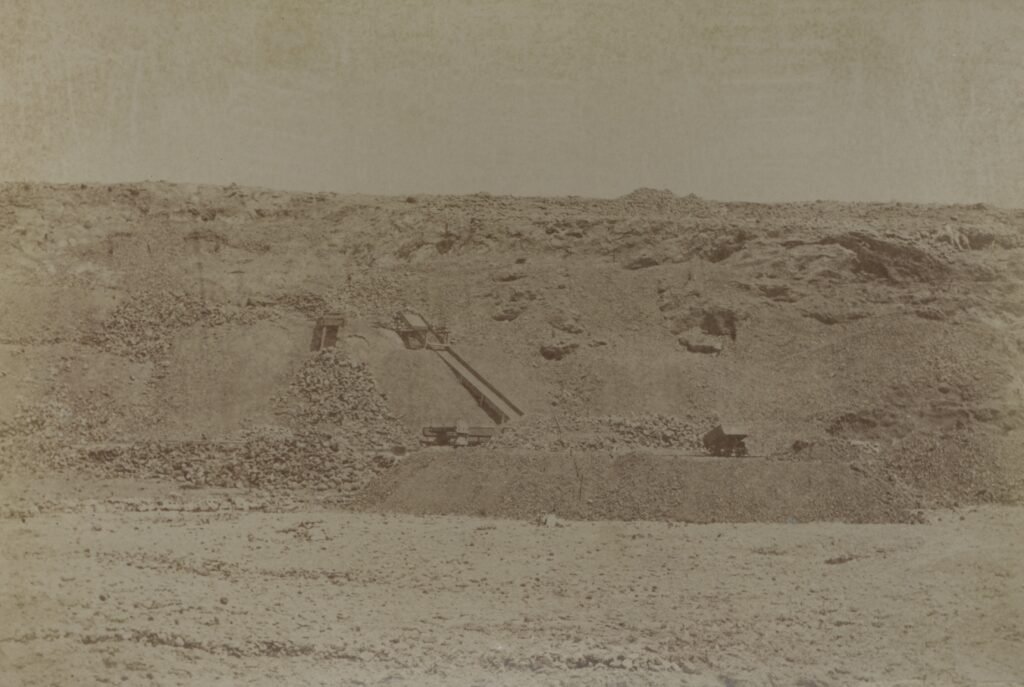
A vast number of the mines were located in areas around the hill ranges to the north and north-eastern side of the island. In places such as Matividiri, Sero Cristal, Wariruri, Rooi Fluit, Daimari, and Miralamar just to name a few. According to an oral account, most if not all the mines were connected via tunnels that would lead to the gold mills in Bushiribana and later Balashi for extraction.
Note: Aruba was a Dutch colony till 1954. In those days, development came via mandate from Curaçao, the main governing body of the Dutch Caribbean Colonies.
The Harsh Reality of Gold Mining
Obviously, I don’t need to mention that anyone working in the mines or at the mills faced life-threatening conditions.
The methods of extracting the shiny stuff from its rocky seclusion varied depending on the innovations of the industry present at the time. The process of gold milling entailed crushing of gold ore by way of wind or steam-powered mills that would release gold fragments and other residual impurities. These would then be mixed with mercury, dissolving the gold and creating a mercury-gold amalgam separated from the impurities. This mixture was then heated to the point that the mercury vaporized (which is extremely poisonous), leaving shiny happy aurum behind.
Note: The Balashi Gold Mill was a steam-powered mill located in Balashi that ran from 1899 till 1916 and produced a total of 3 million pounds of gold. Aurum (Au) as depicted on the periodic table of elements, is Latin for gold.
The Bushiribana Gold Mill
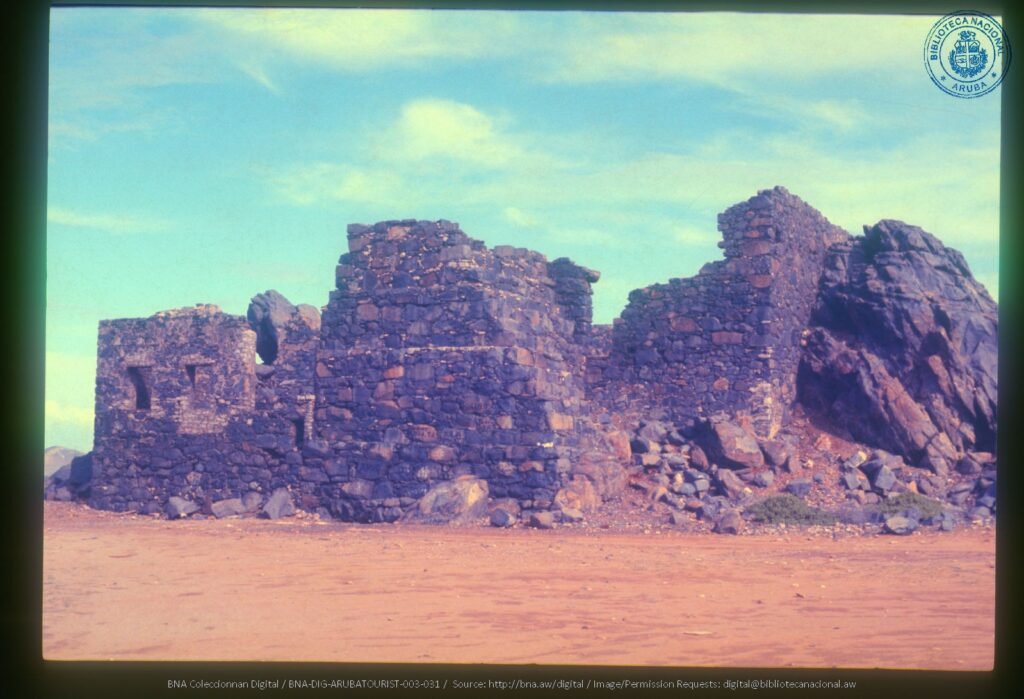
And on that note, I would like to welcome you to Bushiribana Gold Mill… ruins. This stunning wind-powered mill was built between 1872 and 1874 by the Aruba Island Gold Company of London and it was in operation till 1899. It’s primarily built from basalt which the surrounding area is abundant in providing.
Today, the Bushiribana gold mill is an extremely popular attraction for visitors and locals alike. Yet it’s so much more than that… It is a monument and heritage site, a place that whispers of days when Happy Island wasn’t even a thought, a memorial to the Arubian men who gave their lives to the global fever of gold.
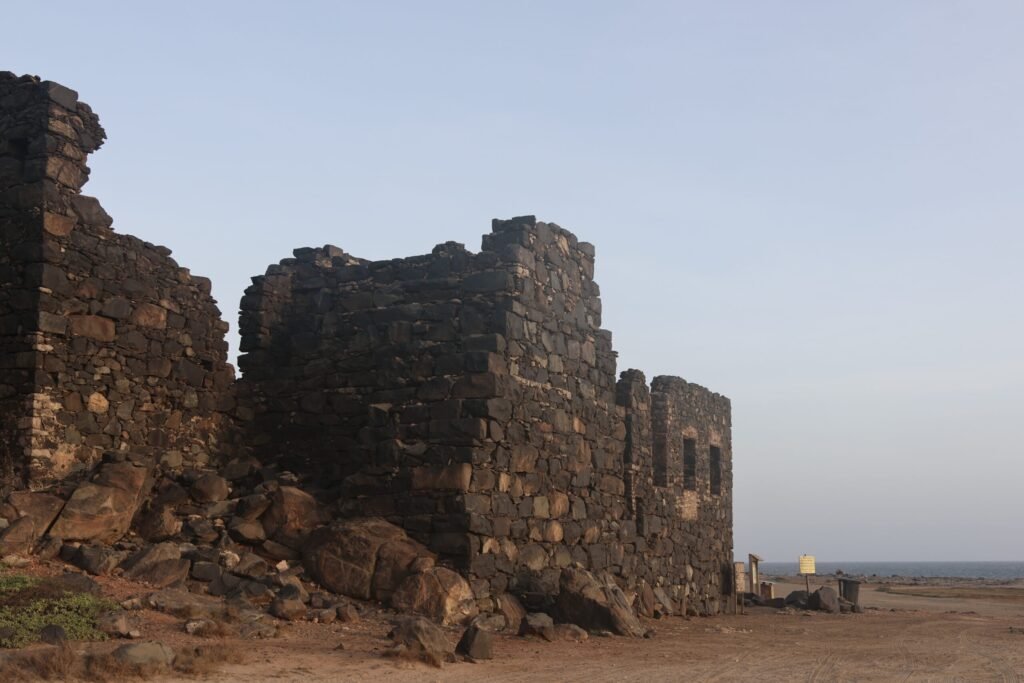
The Meaning of Bushiribana
Bushiribana is an Arawak word meaning: Stacked rocks are an eyesore.
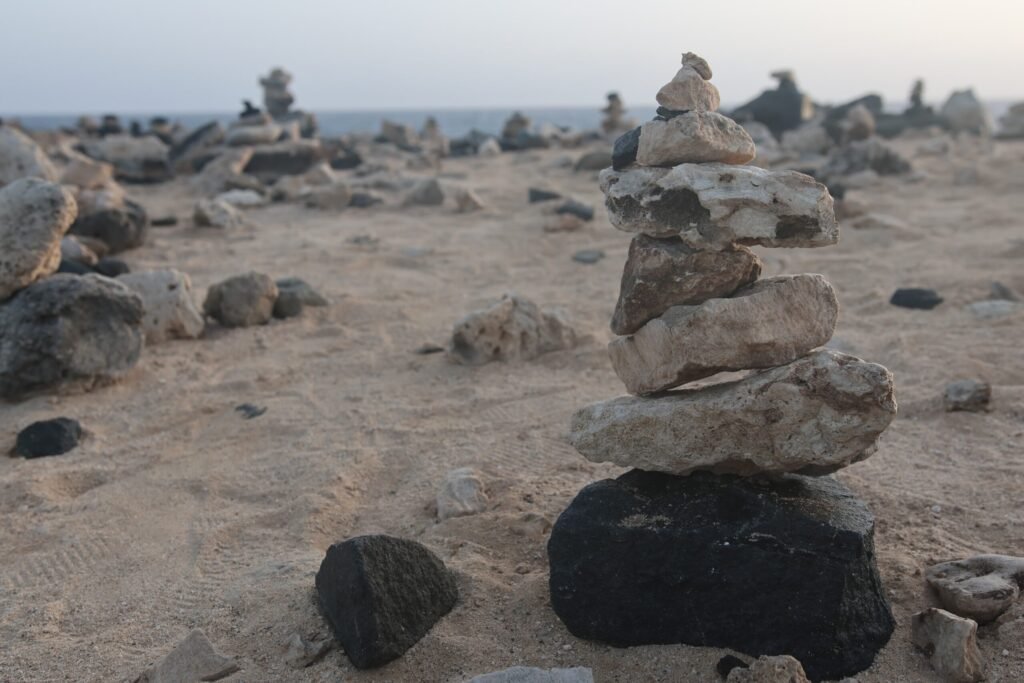
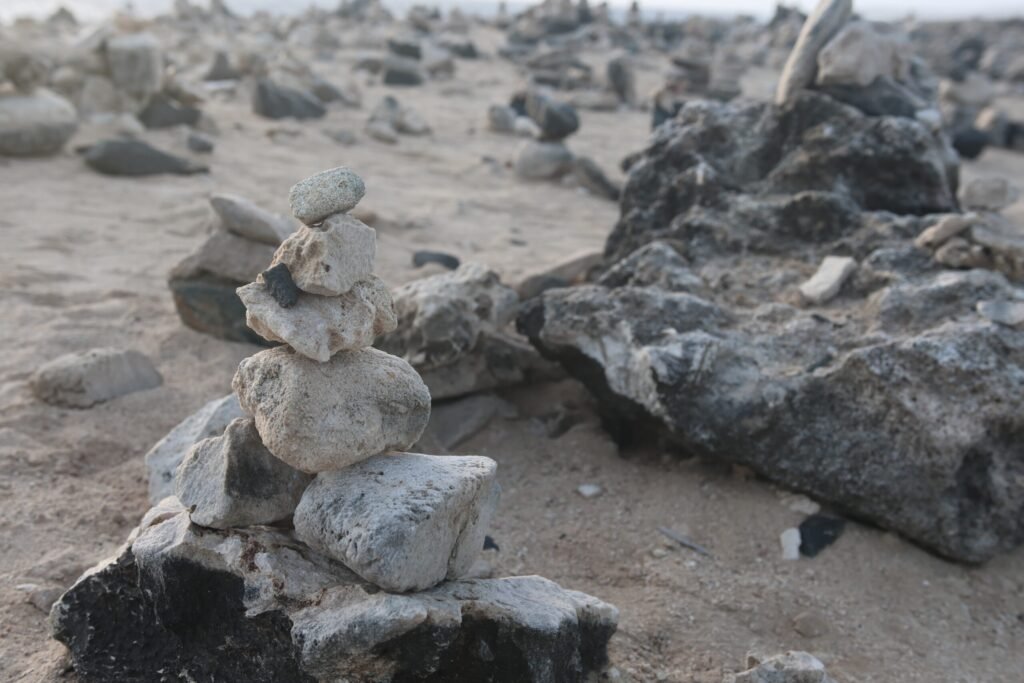
Yours truly is aware that rock stacking is a tradition in some cultures, and also serves as a beacon or way-point on hiking trails with unfamiliar terrain. But Aruba is an island, there’s no need for waypoints. Find the ocean, trace the coast, and you’ll be fine.
Contrary to popular beliefs, rock-stacking doesn’t grant wishes and is not part of Arubian culture. Building rock stacks can contribute to erosion and destabilization of the shoreline. Stacking them can disturb the natural habitat of tiny creatures on the rocky shore.
So be awesome and always remember the true meaning of Bushiribana: Only you can prevent aesthetic pollution.
Conclusion
Guys, that’s it for today’s episode. I hope you enjoyed the tour. Links to our previous episodes, social media platforms, and website are in the description. Don’t forget to subscribe to Djis pa Hari YouTube and click that notification for more Sly-N-Snide content.
As always… once a guest, always a friend.
BROUGHT TO YOU BY


Participa y gana cu campaña nobo di Digital View!
~ January 22, 2026
Digital View ta un compania cu ta brinda e miho digital marketing ariba e isla cu nan variedad di digital billboards cu ta ful rond…

Dicon polis ta nenga di tuma denuncia den caso di Hit & Run?
~ January 20, 2026
Aña 2026 a bin ta start cu un cos straño tras di otro – y nos cu ta un pagina satirico, pa promove alegria mastanto,…

CHANGÁ ta un pelicula cu ta mustra bida Caribense na Hulanda
~ January 20, 2026
E productornan di e pelicula CHANGÁ a pasa Djis Pa Hari Radio Variety Show na Wavez FM pa asina papia un poco tocante esaki y…
[…] In our last episode, we explored the Bushiribana Gold Mills and traced the early days of Aruba’s golden history. […]
[…] In our last episode, we explored the Bushiribana Gold Mills and traced the early days of Aruba’s golden history. […]