In our last episode, we explored the Bushiribana Gold Mills and traced the early days of Aruba’s golden history. Among the key sites of interest is the Balashi Gold Smelter, which played a significant role in Aruba’s mining history.
The Balashi Gold Smelter was essential in processing the gold extracted from the island.
It all began in 1824, when a 12-year-old named Willem Rasmijn discovered gold in Rooi Fluit. That single discovery sparked a 30-year-long gold rush, transforming the island into a mini El Dorado—until 1854, when local digging rights were stripped from Arubans and handed to foreign mining companies.
The gold was mostly found along the northern and northeastern hills, in places like Matividiri, Sero Cristal, Wariruri, Rooi Fluit, Daimari, and Miralamar.
After several failed attempts by foreign companies, the Isola Company finally managed to make a modest profit between 1868 and 1872, employing over 100 workers. Mining restarted briefly in 1878, and by then, Bushiribana Gold Mill was in full swing—operating on and off until 1899.
Fun Fact 💡
💪 Labor Boom: The gold industry attracted workers from across the region—including 40 Bonairians and 16 Haitians.
The Significance of the Balashi Gold Smelter
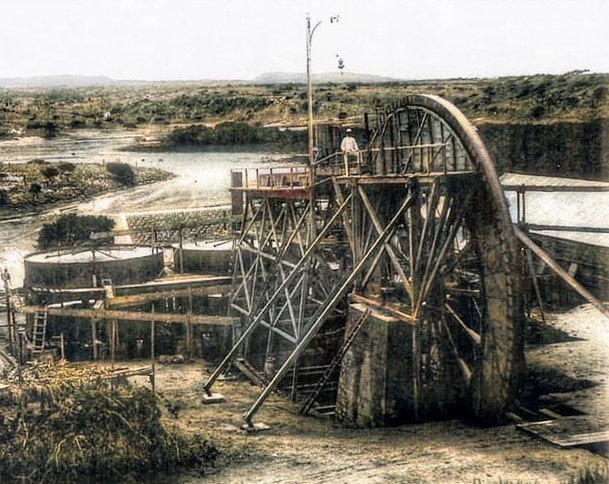
The heritage of the Balashi Gold Smelter remains a point of pride for the island’s inhabitants.
During its operation, the Balashi Gold Smelter processed tons of gold ore, contributing significantly to Aruba’s economy.
Enter: The Balashi Gold Smelter and Mill (BGSM)
The story of the Balashi Gold Smelter is intertwined with the identities of Aruban families who once worked there.
And now, our main attraction—the Balashi Gold Smelter and Mill, or as I like to call it, BGSM.
Built in 1899 by the Aruba Goldmining Company, this state-of-the-art operation opened mines across the island and employed around 200 workers between 1901 and 1905. Unfortunately, rising operational costs spelled disaster, and by 1908, the concession was sold to the Aruba Goudmaatschappij (that’s Aruba Gold Company in English).
This marked a turning point—local elites could finally own shares, with familiar names from Aruban aristocracy like Arends, De Veer, and Beaujon taking part.
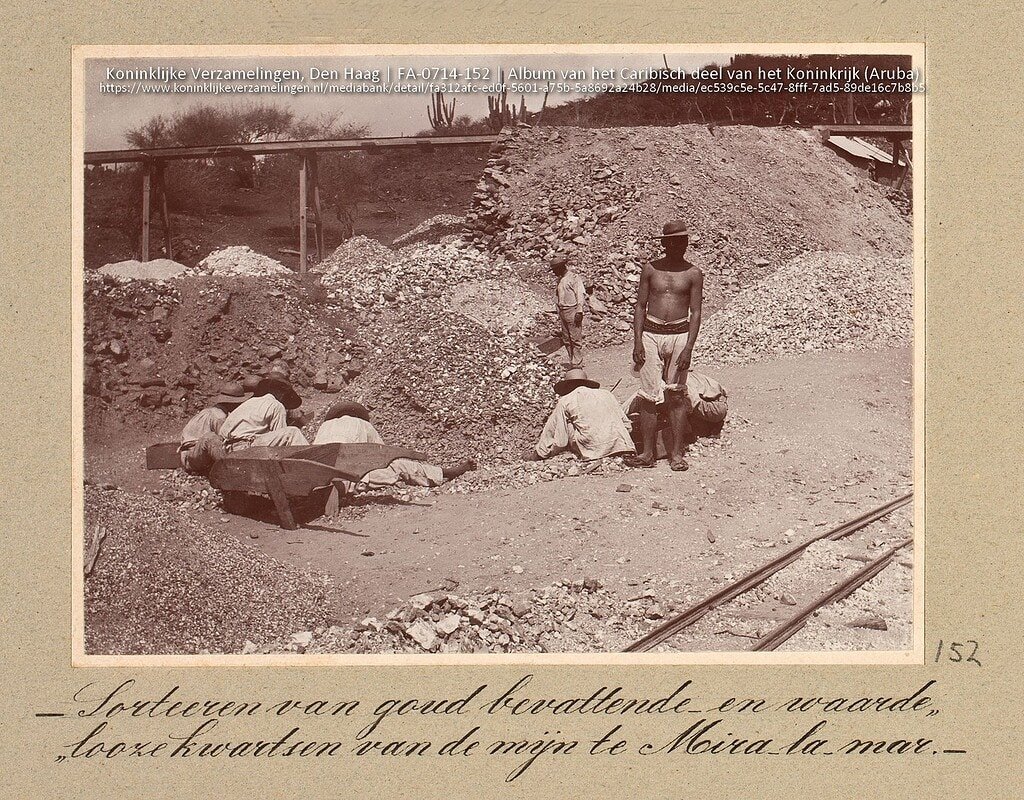
The “Tribute System” and the Rise of Mil Speransa
The A.G.M. introduced something called the “tribute system.”
Instead of hiring laborers directly, anyone could dig for ore and sell it to the company. This clever model let the company avoid labor costs while still profiting from the refining process.
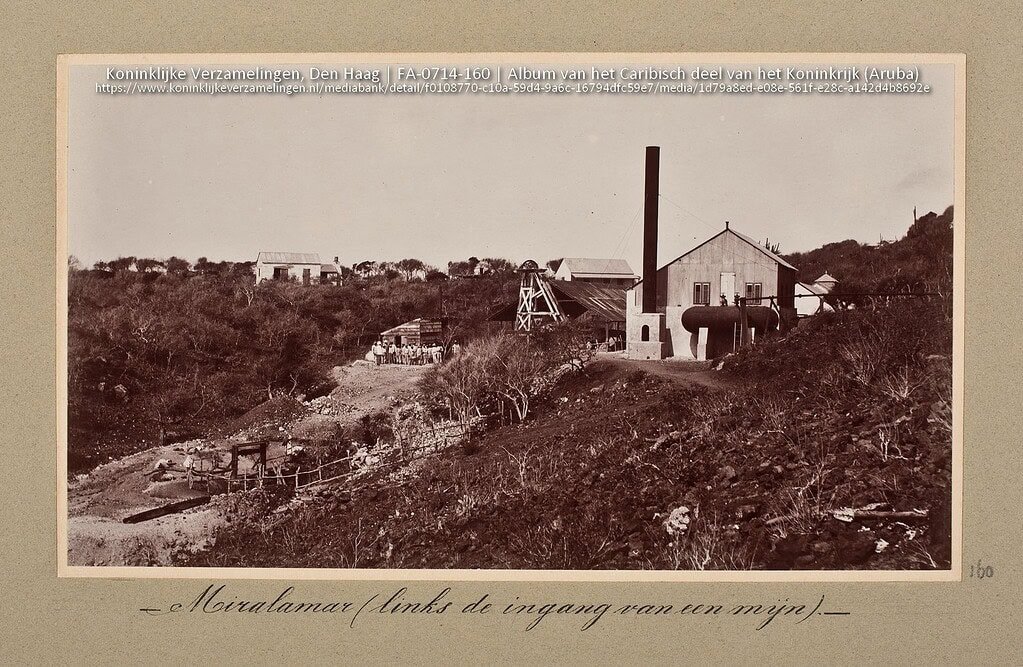
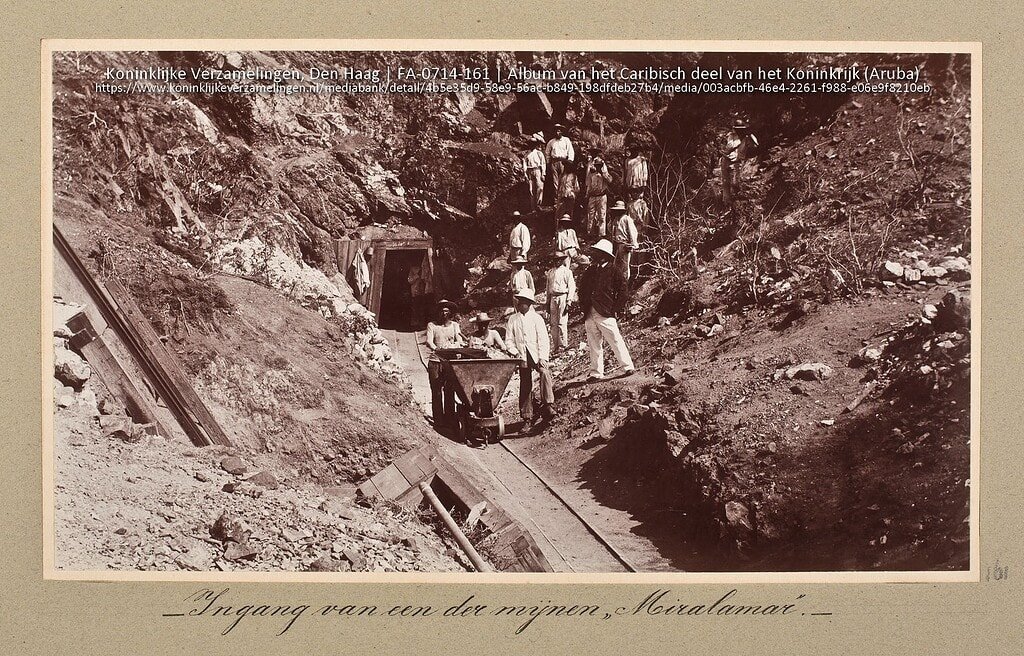
Among the many mines, Mil Speransa in Miralamar stood out. It was the most advanced mine of its time—equipped with a wind machine for air circulation and a sloped shaft so efficient that ladders became obsolete. A steam winch powered the minecarts, hauling up gold ore like a well-oiled machine.
As you explore, remember the important role of the Balashi Gold Smelter in shaping Aruba’s mining industry.
The Legendary “Trekinchi”
Once the ore was ready, it was hauled to Balashi by a beast of a tractor known as the “Trekinchi.”
This massive traction engine looked like a 19th-century locomotive and chugged its way along a specially built road from Jamanota, through Bringamosa, and across the Frenchman’s Pass to BGSM.
It was a slow, muddy, and often comical journey—but the Trekinchi became part of local legend.
Fun Fact 💡
🚜 Trekinchi Trouble: The Trekinchi often got stuck in the mud. Workers had to jump in and pull it out, earning one spot the name “Marawiel”—meaning “where the wheel gets stuck.”
The technology used at the Balashi Gold Smelter was revolutionary for its time, combining innovation and efficiency.
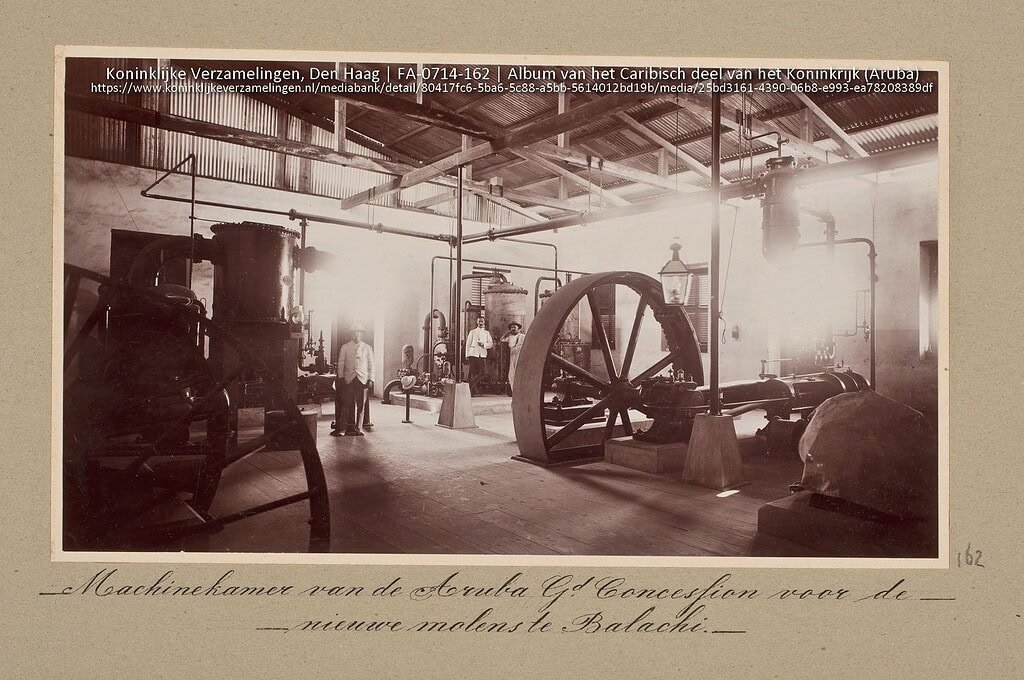
Inside the Balashi Gold Mill
Despite its glory days, the Balashi Gold Smelter faced challenges that ultimately led to its decline.
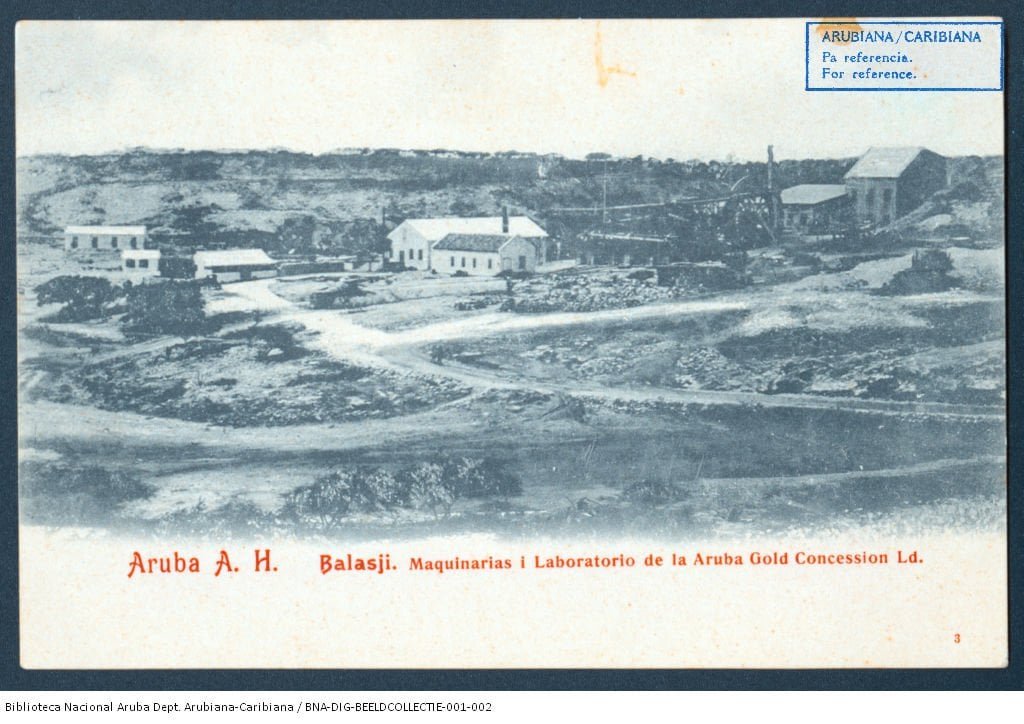
At BGSM, the ore was crushed by a steam mill, breaking it down into smaller fragments. These fragments were then mixed with mercury, which dissolved the gold and created a mercury-gold amalgam. When heated, the mercury vaporized, leaving behind pure, solid gold. The facility was no small operation—it housed six fire furnaces, a high crushing mill, a melting furnace, and giant purification vats.
The legacy of the Balashi Gold Smelter continues to influence local culture and tourism.
Ultimately, the Balashi Gold Smelter represents a significant chapter in Aruba’s storied past.
It was an industrial marvel of its time, standing proudly against the backdrop of Aruba’s rugged landscape.
Today, the site of the Balashi Gold Smelter serves as a reminder of Aruba’s rich mining history.
Visitors to Aruba often seek to learn more about the Balashi Gold Smelter and its historical impact.
The Fall of the Golden Era
But like all golden ages, this one didn’t last forever. During World War I (around 1915–1916), operations came to a halt. The shortage of gunpowder for dynamite and the increasing risks of mining made it impossible to continue. And so, the story of the Balashi Gold Smelter and Mill came to a quiet, glittering end.
And if you’re wondering whether there’s still gold left out there… Well, let’s just say—if there was, I wouldn’t tell you.
Fun Fact 💡
👑 Aruban Aristocracy: The gold companies included well-known Aruban families like Arends, De Veer, and Beaujon—the island’s early elite.
THIS EPISODE IS BROUGHT TO YOU BY


Sensacionalismo den prensa: Aruba tin e problema aki ainda?
~ November 3, 2025
Vincent Smit, di e organisacion 1Almere na Hulanda, recientemente tabata na Aruba unda cu el a duna un tremendo charla durante RAPP (Red Arubiano Di…

Makamba Style Snacks cu bunita iniciativa pa Fundacion Zinnia
~ November 3, 2025
E nomber ta pret, sigur. ‘Makamba Style Snacks’ a haci un bunita iniciativa pa Fundacion Zinnia caminda cu a yuda nan durante un fin di…