
Unveiling Paardenbaai: Aruba’s hidden Dutch colonial influence
Aruba has been a part of the Dutch kingdom since 1636 when the Dutch wrested control of these territories from the Spanish towards the end of the 30 and 80 years’ war. It is well-documented that most European wars overlapped during the colonial era, and any monarchy, republic, or company that emerged victorious would claim the spoils.
In our case, these spoils included the islands of the “ABC” (Aruba, Boneiru y Korsow) and the “SSS” (Saba, Statia, and St. Maarten) islands, distinct from French territory like St. Martin.
During the zenith of Dutch colonialism, led by the Dutch West Indische Companie, the ABC islands became vital intermediaries in trade between the Americas, Europe, and Africa.
Curaçao emerged as the main hub, trading port, and governing body of the Caribbean colonies, with development mandates flowing from there to other islands, including Aruba.
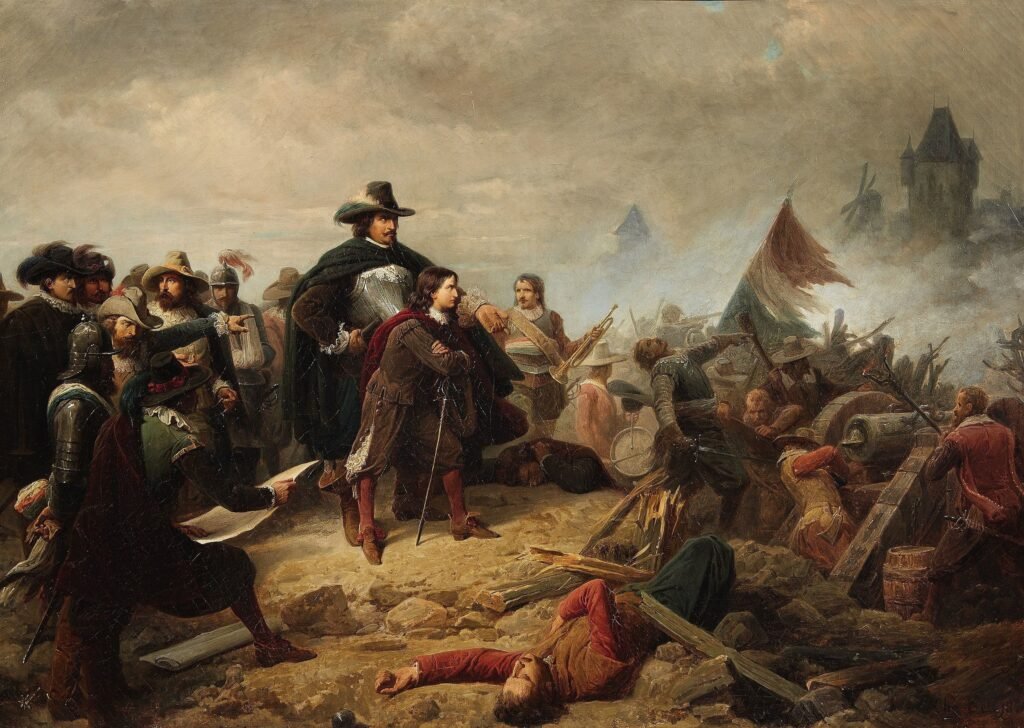
Aruba’s role was primarily as a trading post, with its main trade resource being horses. Welcome to Paardenbaai, or perhaps Playa de Caballos. Or better yet, Horses-Bay – the name I’m aiming for. This area was known as such before it became the capital and acquired the name Oranjestad.
The horse trade lasted from the late 17th to the late 19th century. Much of the current infrastructure, particularly along the wharf and cruise-ship terminal, did not exist then. The entire area was later dredged to expand the landmass.
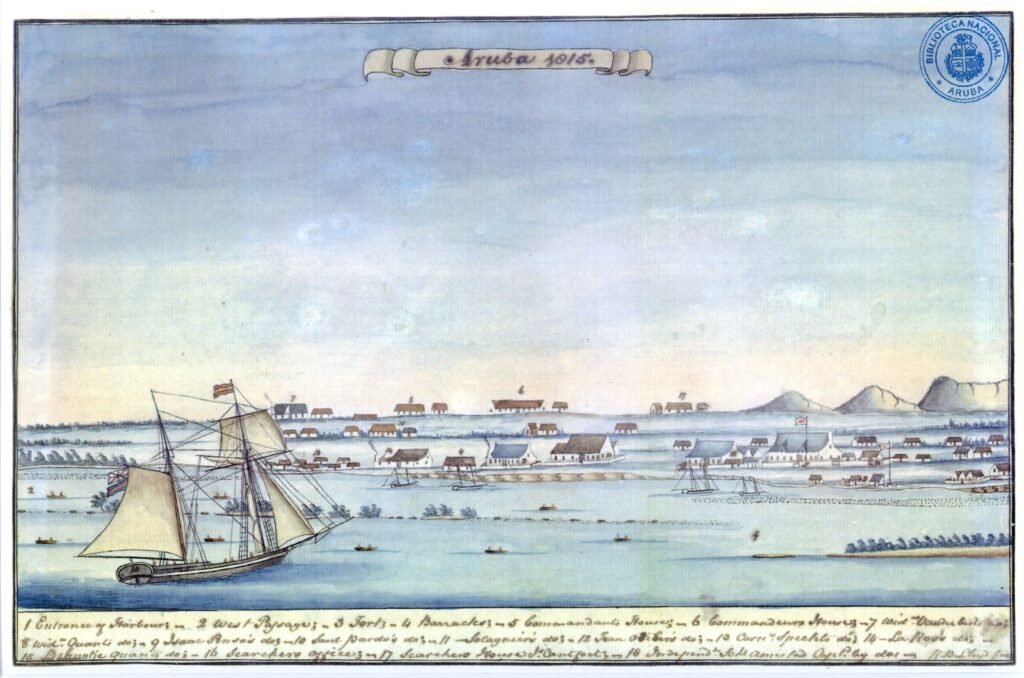
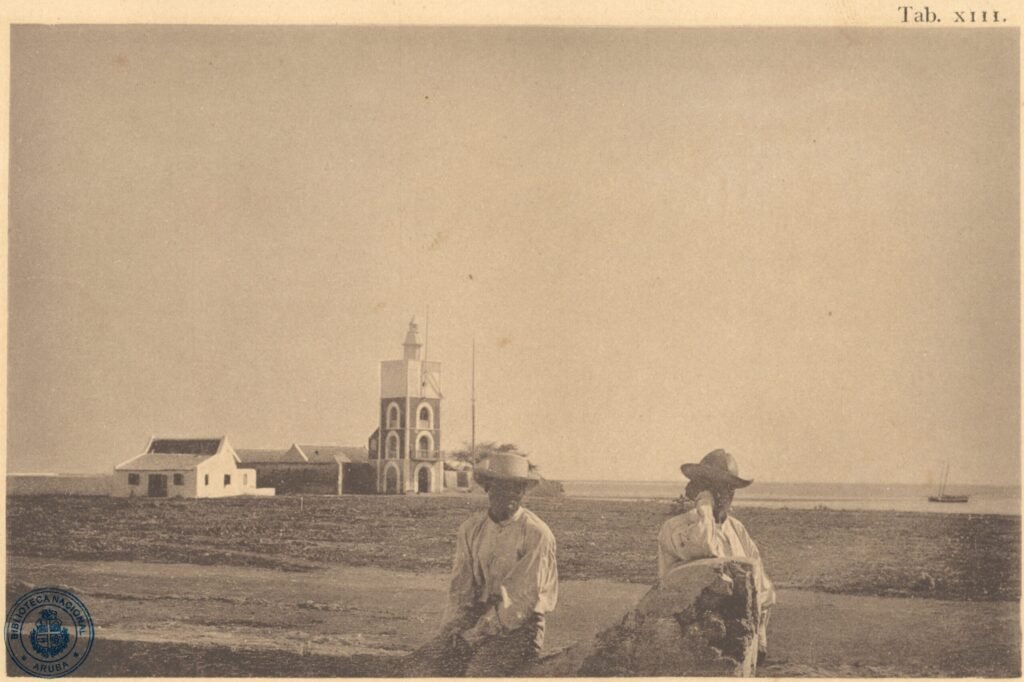
The absence of a wharf or port forced traders to anchor offshore and guide horses to the beach. Hence, the names Horses-Bay or Paardenbaai in Dutch, or Playa de Caballos in Spanish.
According to legend, the mare-to-stallion ratio was seven to one, as mares were supposedly easier to handle. Personally, I know little about horses, except that standing behind one is a surefire way to regret it.
That’s all the time we have for today’s journey. I hope you enjoyed the tour. As always, once a guest, always a friend.
BROUGHT TO YOU BY

Being a Caribbean Student in the Netherlands is Hard
~ October 27, 2025
Let’s be real — being a Caribbean student in the Netherlands is hard. From the moment you step off that plane and realize “cold” doesn’t…