
Hey people! It’s your mama’s favorite tour guide, Beach Lama, and today on the Sly ’n Snide Tour Guide, we’re talking Aruba’s Thanksgiving: Aruban style. Specifically, we’re diving into Día di San Juan and the wonderfully weird tradition of Dera Gay.
Yes, we’ll be oversimplifying a few things… for time, sanity, and the faint hope you’ll remember any of this later.So pack your sunscreen, your shade, and—of course—your bowl. Follow the magic stick.
A Global Feast With Local Flavor
The Feast of Saint John the Baptist is celebrated pretty much everywhere Christianity landed—either on June 23rd (the eve) or June 24th (the official date).
Experience the unique blend of cultures during Aruba’s Thanksgiving celebrations, where local traditions meet festive joy.
It’s an interesting mix of organized religion and older pagan or animist traditions:
bonfires, hypnotic music, symbolic colors, fertility rituals, costumes, flora, fauna—the whole mystical buffet.
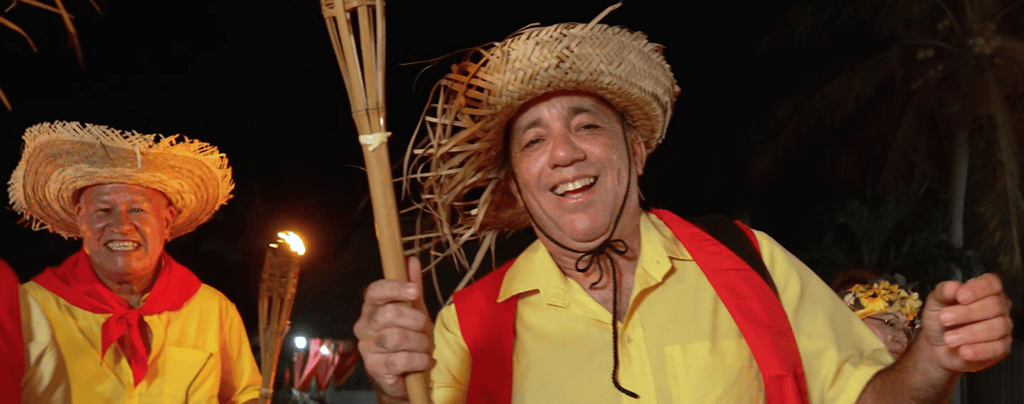
In the global north, it’s a summer solstice celebration.
In the global south, especially rural areas, it marks the end of the harvest season.
To understand Aruba’s take, we have to slip into the dusty shoes of a cunukero and walk through the rhythms of the harvest.
The Aruban Harvest Rhythm
Harvest in Aruba begins around February or March when the sorghum is reaped and cured for three weeks. After peeling and separating the stalks from the cobs, everything gets bundled into a sheaf.
Sheafing happens to the beat of the tambu, whose drum rhythms match each step of the harvest. Cunukeros chant the Songs of the Wind, turning farm work into a kind of spiritual concert.
Then comes “the journey home”—the sheaves are carried to the barn to the fanfare of even louder tambu rhythms celebrating their arrival.
By April and May, preparation for the rainy season begins. Gardens get their final TLC, and makeshift dams are repaired to hold precious water for the next sowing.
Which brings us to…
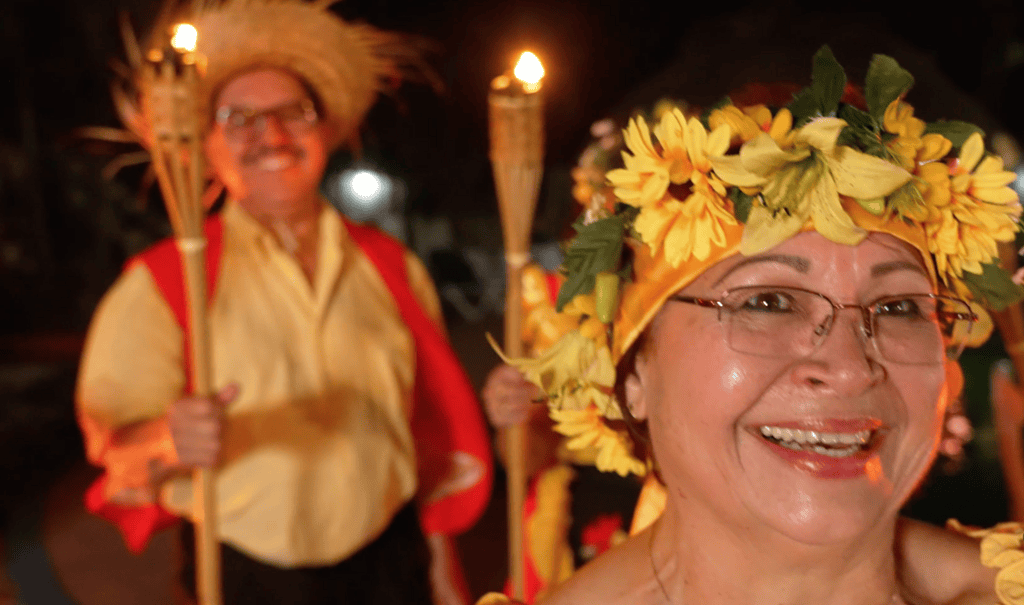
June 24: San Juan Day—Where Fire Meets Gratitude
Near sunset on St. John’s Day, all the leftover stalks from the harvest—and basically any biodegradable cunucu waste from April–May—are set ablaze.
The bonfire is both thanksgiving for the past harvest and an offering of hope for the next.
And then… the real show begins.
Dera Gay: Blindfolded Chaos With a Rooster Prize
Dera Gay translates loosely to “Burying the Rooster,” though honestly, the game is more like blindfolded whack-a-mole—with a rooster as the jackpot.
While customs vary by neighborhood, it usually goes like this:
A live rooster is placed inside a hole, covered with a calabash balanced at ground level. A small hole in the calabash lets the rooster breathe—and poke its neck around like a feathery periscope.
Then blindfolded men are spun around until completely disoriented (think: Caribbean carnival meets toddler-on-sugar-rush), and released to find and smash the calabash with a stick. All while dancing to the Dera Gay chants.
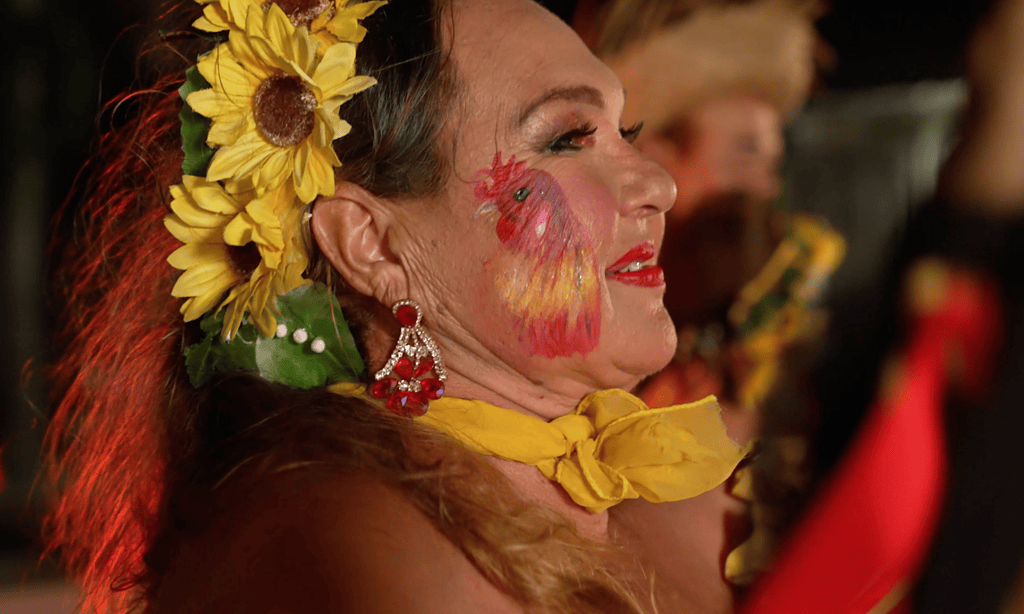
They get three tries, and whoever breaks the calabash goes home with the rooster.
Now… did some roosters lose their “cluck” over the years?
Yes. But surprisingly, most survived to crow another day.
Contrary to popular belief, the rooster is not supposed to be killed—at least not in the modern practice. Today, public events usually replace the bird with a wooden or plastic replica. PETA approves.
As for why the rooster? Fertility symbolism. Or maybe sowing vibes. Honestly, your guess is as good as mine. Tracing the origins of these customs is tricky—like following rooster footprints in the sand. Some influences point to South and Central America, others to African and European traditions.
In short: it’s as creole as funchi and pan bati.
And That’s a Wrap!
That’s it for today’s tour, folks. I hope you enjoyed this fiery, feathery look at Aruba’s version of Thanksgiving.
Check the description for links to previous episodes, socials, and the Djis pa Hari YouTube page.
Hit that subscribe button and ring the bell for more Sly-N-Snide adventures.
Remember… once a guest, always a friend.
Fun Facts (Because Who Doesn’t Love Extra Seasoning?)
- The tambu rhythms match every stage of the harvest: Siya, Song of the Wind, and Dera Gay.
- Some young men traditionally jumped over the bonfire—because why not add danger?
- The big yellow flour bags used for storage were also sewn together and placed on the sheaf.
- Another (now obsolete) tradition had young men on donkeys chasing a rooster hung from a wooden fork—less PETA-friendly, popular among the galleros of Cura Cabay.
- Sheaf in Papiamento is parapeta or parapete.
- Today, both men and women can take part in the dance and rituals.
- The rooster may also symbolize an evangelical account connected to John the Baptist—its cry reportedly foreshadowed his decapitation.
- The primary color of San Juan is yellow, symbolizing the mighty Kibrahacha tree—so tough it literally “breaks the hatchet.”
This episode is brought to you by:


Pueblo ta perdiendo confiansa den palabra bunita di politico?
~ January 26, 2026
E contesta? Si. Pueblo ta perdiendo confiansa den palabra bunita di politico, pa gran mayoria, y pa algun tempo caba. Nos por lag’e te eynan…

Evento Calypso Heritage ta celebra 10 aña educando comunidad di Aruba
~ January 24, 2026
Nos a yega di entrevista Gregory Richardson, un biblioteca riba su mes den loke ta e tema di Calypso y carnaval den su totalidad, e…

Abo ta bay carnaval cu baby of mucha chikito?
~ January 23, 2026
Ah, ki dushi ta carnaval. Pero carnaval no ta asina dushi ora cu bo ta mira cierto cosnan cu tin biaha ta medio pone bo…